
Meet Gia
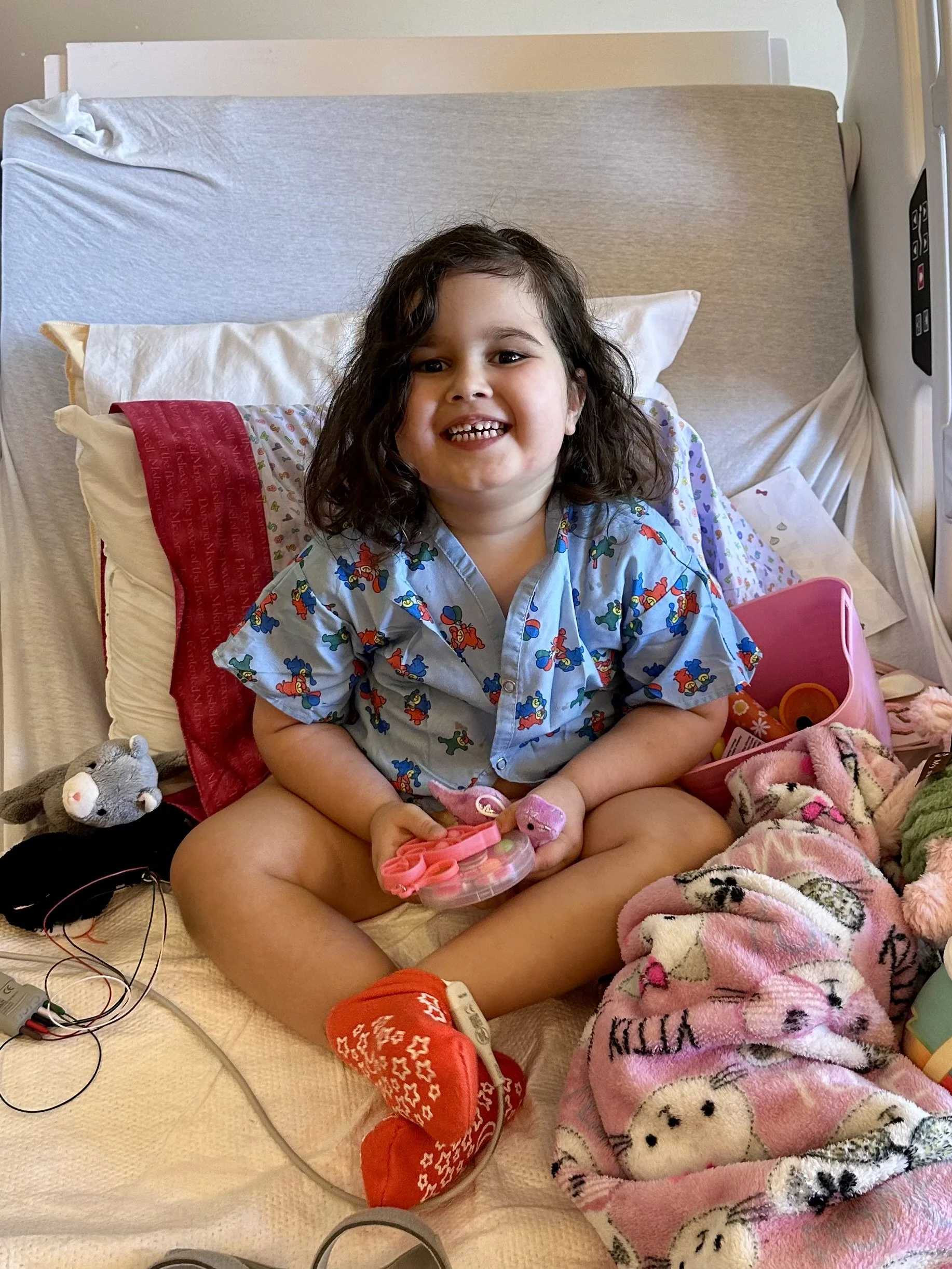
Gia is a sweet, spirited little girl with a big personality and an even bigger heart. She loves cats, spending time with her family, making people smile, and bringing her own special kind of joy wherever she goes. She is curious, playful, loving, and incredibly strong.
ROHHAD may be part of Gia’s journey, but it is only one small part of who she is. Gia is a daughter, a sister, a granddaughter, a friend, and a little girl with so many adventures still ahead of her. This site is about sharing all of Gia, the smiles, the milestones, the challenges, the victories, and everything that makes her wonderfully Gia.

Surrounded by Love
At the heart of Gia’s Journey is a family standing beside her every step of the way. Her mom, Lindsey, dad, Kevin, and brother, Roman, are Gia’s biggest supporters, surrounding her with love, strength, laughter, and encouragement through every challenge and every victory.
And Gia’s circle of support extends far beyond her immediate family. She is surrounded by loving grandmothers and grandfathers, aunts and uncles, cousins, extended family, and an incredible community of friends. From thoughtful messages and words of encouragement to simply being there when it matters most, their love has been a constant reminder of just how many people are walking this journey alongside Gia.
Gia may be facing a rare diagnosis, but she is never facing it alone
About ROHHAD
ROHHAD is an extremely rare, complex and serious pediatric disorder. It affects several of the body's automatic systems, including breathing, hormone regulation, heart rate and body temperature, along with other functions we normally don't have to think about. Left untreated, it can be life-threatening, which is why early recognition and ongoing care make such a difference.
-
The name ROHHAD stands for:
R — Rapid-Onset Obesity
Children with ROHHAD typically experience significant and unexpected weight gain over a relatively short period of time. This is often one of the first noticeable signs of the condition.H — Hypothalamic Dysfunction
The hypothalamus is a small but incredibly important part of the brain that helps regulate appetite, growth, hormones, body temperature, sleep, thirst and other essential functions. In children with ROHHAD, some of these systems can become disrupted.H — Hypoventilation
ROHHAD can affect the body's automatic ability to breathe deeply and frequently enough, particularly during sleep. This can cause carbon dioxide levels to rise and oxygen levels to fall. Because a child may not recognize or respond normally to these changes, careful respiratory monitoring and breathing support can be an important part of treatment.AD — Autonomic Dysregulation
The autonomic nervous system controls many of the things our bodies do automatically, including heart rate, blood pressure, digestion, sweating, pupil response and temperature regulation. ROHHAD can interfere with some or several of these functions. -
ROHHAD is extremely rare, with fewer than 200 cases documented worldwide.
Children with ROHHAD generally experience typical growth and development early in life before symptoms begin, most commonly during early childhood. The condition can also look different from one child to another. Symptoms may appear at different times and with varying degrees of severity.
Researchers still do not fully understand what causes ROHHAD. There is currently no single laboratory or genetic test that definitively diagnoses the condition. Instead, physicians make the diagnosis by evaluating a child's symptoms, medical history and specialized testing while ruling out other conditions. One recent area of research involves antibodies called ZSCAN1, which have been found in most children with ROHHAD tested to date. While not yet a stand-alone diagnostic test, ZSCAN1 testing is increasingly used to help support a diagnosis.
-
Because ROHHAD involves several different systems, children may experience a wide range of symptoms. These can include:
Rapid and unexpected weight gain
Changes in appetite or thirst
Abnormal hormone levels
Difficulty regulating body temperature
Changes in sleep
Shallow or inadequate breathing, especially during sleep
Changes in heart rate or blood pressure
Excessive or decreased sweating
Gastrointestinal or digestive problems
Changes in behavior, mood or emotional regulation
Abnormalities in growth or puberty
Not every child experiences every symptom.
Some children with ROHHAD also develop tumors of neural crest origin, such as ganglioneuromas or ganglioneuroblastomas. For this reason, tumor screening and continued surveillance may be part of a child's long-term medical care.
-
There is currently no cure for ROHHAD, so treatment focuses on identifying and managing each child's individual symptoms.
Because breathing problems can become serious, respiratory monitoring and support are especially important. Some children require assisted ventilation while sleeping, while others may require additional respiratory support.
Care may also involve specialists in pulmonology, endocrinology, cardiology, neurology, oncology, sleep medicine and other areas. Regular testing helps the medical team identify changes as early as possible.
With such a rare and complicated condition, early recognition, careful monitoring and coordinated multidisciplinary care are extremely important.
-
There is still much that researchers are working to understand about ROHHAD, including why it develops and whether the underlying disease process can eventually be treated directly.
Current research is exploring possible immune-related mechanisms as well as new approaches to diagnosis and treatment. Because the number of known patients is so small, every new study and collaboration among physicians, researchers and families can contribute valuable knowledge.